
Kennesaw Directory Collections by Year
The Georgia Room holdings inventory names each printed run instead of implying a continuous local series. Only three editions are confirmed as expressly Kennesaw-inclusive. Other county-seat and suburban volumes can supply context, but their coverage must be checked in the title page and geographic notes before a name is treated as local.
| Collection | Years | Where Held | Access |
|---|---|---|---|
| Marietta, Smyrna, Acworth and Kennesaw | 1977, 1985–86, 1987 | Switzer Georgia Room | Onsite printed volumes |
| Atlanta Suburban Polk's | 1969, 1972, 1975, 1978–79, 1981–82, 1984–86, 1988–90 | Switzer Georgia Room | Onsite; verify northwest coverage |
| Haines Atlanta Northwest Suburban | 2007, 2008–09 | Switzer Georgia Room | Onsite criss-cross volumes |
| U.S. City Directories 1821–1989 | Database collection | Georgia Archives and licensed libraries | Onsite database access |
| General Name File | Compiled over many years; online since 2008 | Georgia Archives Virtual Vault | Free online card browsing |
The 1977, 1985–86 and 1987 editions form the confirmed Kennesaw city directory spine, not an annual run. Marietta directories begin earlier, and Marietta/Smyrna titles fill many mid-century years, yet northern Cobb coverage is not guaranteed. Gaps should be bridged with deeds, tax digests, census schedules, newspapers and yearbooks rather than filled by assumption.
Atlanta Suburban Polk's volumes may widen the search across northwest metro communities. Check the table of contents and coverage note before turning to the alphabetic entries. The Haines Northwest Suburban books are later address and telephone tools, but their title alone does not prove that every Kennesaw road appears. For the database collection, use a library or Georgia Archives workstation where licensed access is available, and save the city, year and image citation with each result.
Kennesaw Directories at Switzer
The Charles D. Switzer Library in Marietta houses the Georgia Room. Its county inventory is the best starting point because it distinguishes exact publishers and years. Researchers should record the volume title, edition, coverage statement and abbreviation key before copying a resident entry. Staff help and onsite shelves provide the fallback when a catalog record does not reveal whether Kennesaw appears.
The official library page shown here identifies the building that holds the local Kennesaw city directory collection.
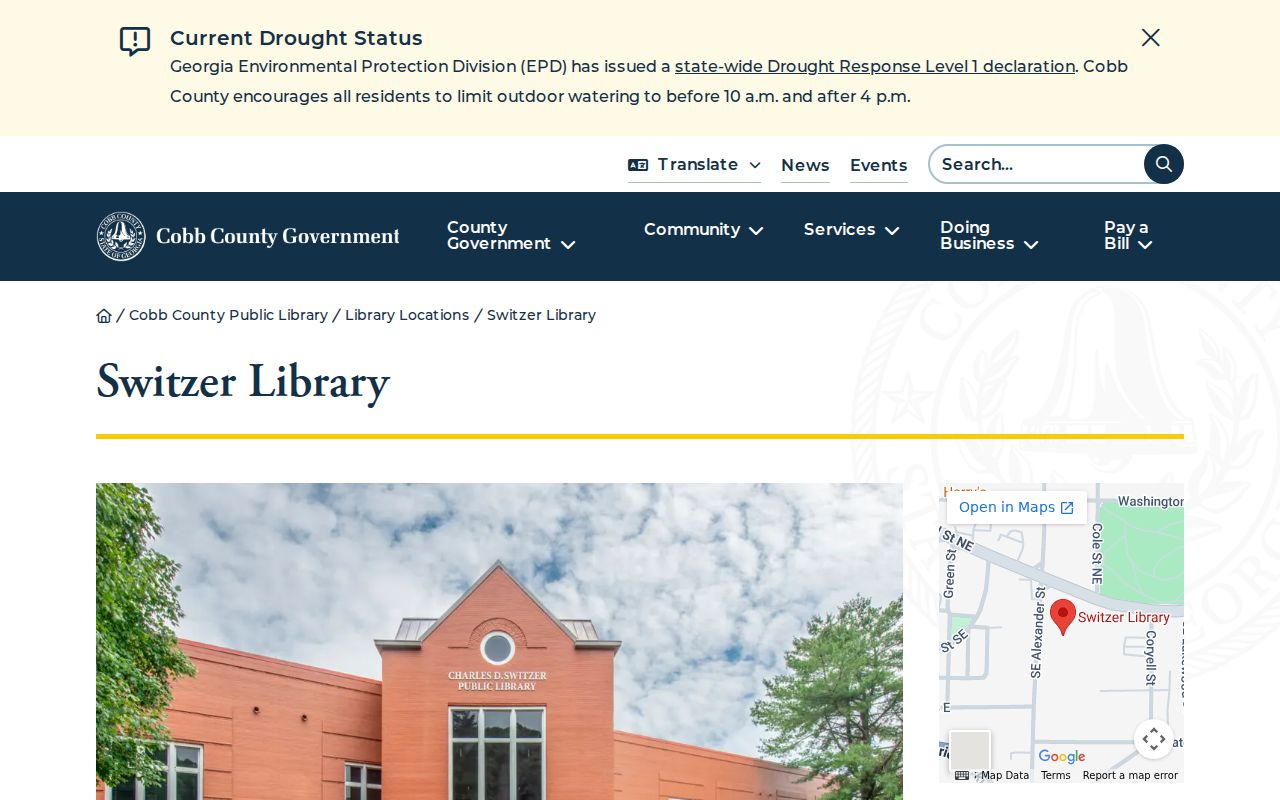
An onsite visit can answer questions a generic database result cannot: whether the volume includes a street section, which suburbs appear, and what symbols its publisher used.
Bring a list of surname variants, known addresses and date ranges. Begin with the exact Kennesaw-inclusive volumes, then fan outward to Acworth, Marietta and suburban Atlanta titles only when the evidence calls for it. Photograph the title page and publication year before the entry page. That small step prevents a loose image from being assigned to the wrong edition. If staff identifies microfilm or a database substitute, note the reel, database title and image number in the same research log.
Three Confirmed Kennesaw Editions
The irregular local years are a useful warning. The 1977 volume stands alone before the paired 1985–86 edition and the 1987 edition. A missing name between those points does not establish a move date. It may reflect a publication gap, a missed canvass, an unlisted telephone, a renter omitted from the householder entry, or a coverage boundary.
Read each city directory as a dated observation. Copy initials, spouse notation, occupation, employer, address and any telephone field exactly. Then compare that observation with a deed or tax record near the same year. An occupant and owner may differ, and that mismatch can be the most useful clue.
Decode a Kennesaw Directory Entry
A Polk-style alphabetical line commonly places surname and given name first, followed by a spouse in parentheses, a trade or employer and a home address. Haines volumes may lead with address and telephone. The county inventory does not reproduce an actual page, so the exact marks must come from the front matter of the volume being used.
| Listed name | Surname, given name and initials; separate wage earners may have their own lines |
|---|---|
| Spouse or widow mark | A spouse may appear in parentheses; "wid" can name a deceased spouse |
| Work clue | Occupation, title, employer or business address when printed |
| Home clue | House number, street and publisher-defined residence or rooming marks |
| Street context | Householder, business, vacancy, new house or no-return notation where used |
- Criss-cross directory
- A volume arranged by street address or telephone instead of only by surname.
- Householder index
- A list centered on the principal listed person at an address, not a full household census.
- Abbreviation key
- The publisher's legend for symbols and shortened terms, usually near the front of the book.
Photograph or transcribe the key with the entry. A single letter may mean home, resides, rooms or something unique to that publisher. Never expand it from memory.
Reverse Kennesaw City Directories
The street section reverses the alphabetical list: street name comes first, then house number and listed occupant or business. It can turn one known address into a careful walk along the block. Record cross streets, vacant lots, numbering gaps and businesses, but do not infer kinship among nearby names.
For modern ownership and parcel boundaries, switch to the Kennesaw street directory. Printed street sections are historical observations, while assessor and deed records answer present ownership questions.
Kennesaw Names in the Vault
The Georgia Archives General Name File is not a city directory, but it can bridge a surname to citations in county histories, manuscripts and other records. Search by surname-letter range, then browse the cards manually. A range can hold roughly 40 to 60 cards, so the useful result may sit several images away from the first card shown.
The captured General Name File interface shows the online access point used for this Kennesaw directory companion.
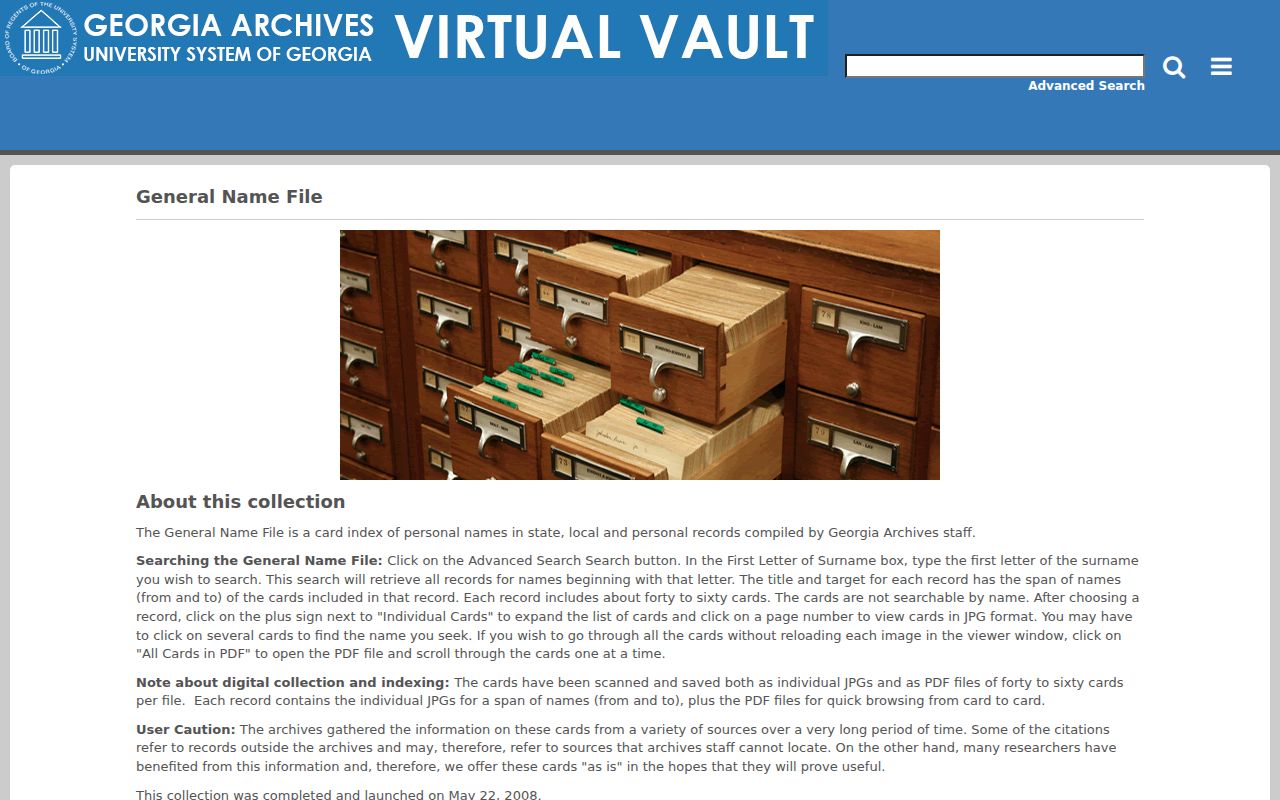
A card is a pointer, not always the source itself. Follow its citation into the named book or collection, and ask Archives staff when an older reference falls outside current holdings.
Search Big Shanty Before Kennesaw
Kennesaw developed around the railroad stop known as Big Shanty and incorporated under the Kennesaw name in 1887. A nineteenth-century resident may be indexed under Big Shanty, Cobb County, a militia district, land district and lot, Acworth or Marietta. The modern city name alone can miss the record.
| 1832 | Cobb County was created, with Marietta as the records center. |
|---|---|
| 1850 | Named-person federal census schedules begin for the relevant period. |
| 1887 | Kennesaw incorporated under its current name. |
| 1977 | First confirmed Kennesaw-inclusive directory in the Georgia Room inventory. |
| 1985–87 | The remaining confirmed local editions appear. |
This place-name bridge matters more than a loose historical anecdote. It changes the terms entered in a catalog, deed index, newspaper archive or county history.
Georgia Archives Beyond Directories
The Georgia Archives research collections add city directories, church and cemetery files, tax digests, county histories, maps, newspapers and census tools. African Americans are named in federal population schedules beginning in 1870; earlier slave schedules generally name slaveholders, while 1867 freedmen tax digests may identify the employer responsible for head tax.
The official Archives page captured below helps locate these Kennesaw city directory companion sources.
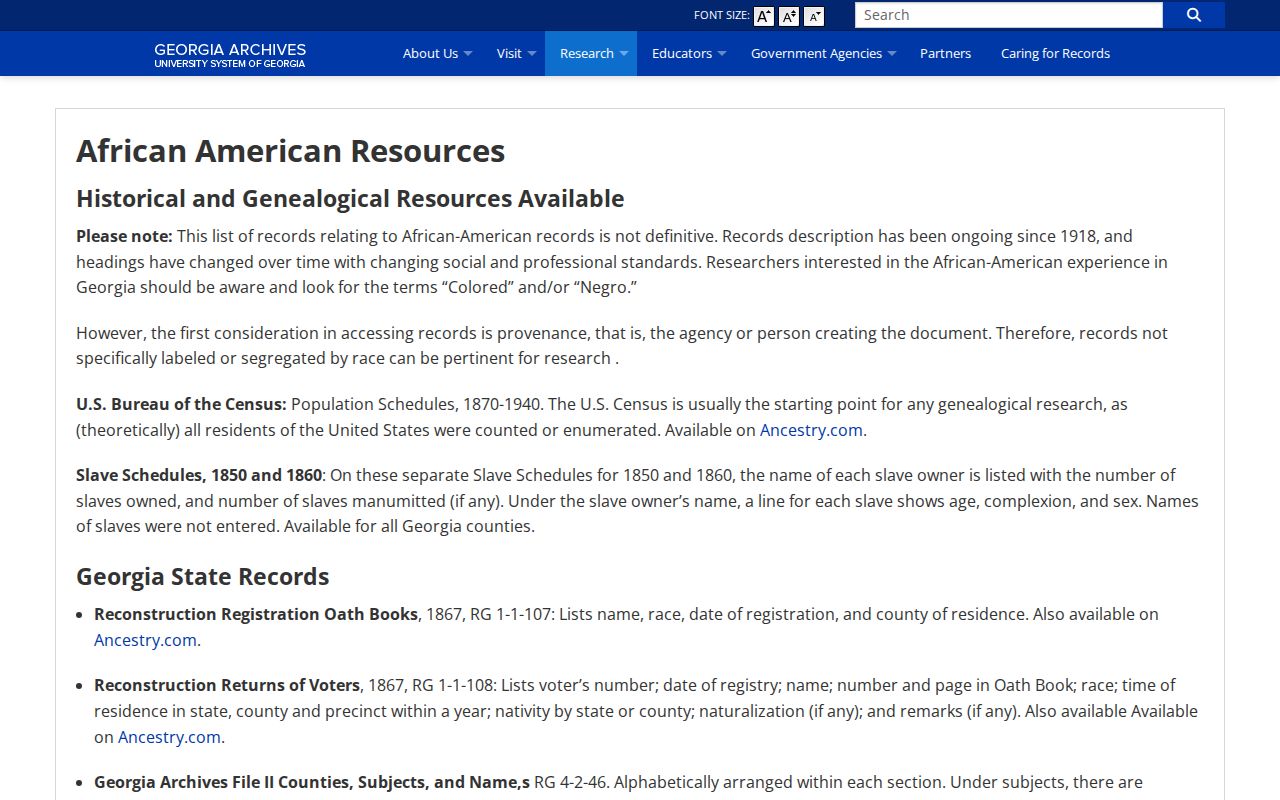
These records can explain a city-directory line or fill an absent year. They still require source-by-source citation and should not be collapsed into one unsupported life story.
Bridge Kennesaw Directory Gaps
Kennesaw State University Archives preserves institutional records, photographs, publications and special collections. Yearbooks, student newspapers and faculty publications can connect a name to a date without proving current residence. Georgia Historic Newspapers, local Cobb papers, GenealogyBank and the Atlanta Constitution can add notices, clubs, addresses and obituaries.
Church minutes and cemetery files are especially useful before statewide birth and death registration began in 1919. Obituaries may supply relatives, married names, church, cemetery and funeral home, but they are authored notices. Verify each fact with probate, a certificate, a deed or another primary record.
Trace Families in Kennesaw Directories
Family history works best when each city directory entry is paired with a source made for a different purpose. The directory gives a dated name and address. A deed or tax digest may identify an owner. The census can show household relationships, age, birthplace and occupation. Probate and obituary sources may explain why a name stops appearing.
Keep negative searches in the log too. Record the spelling, edition, section and pages checked so that a later name variant does not erase the earlier work.
- Begin with a known surname or address in 1987 or 1985–86. Copy the full entry and its abbreviation key.
- Move to 1977 and test the surname, spouse, adult wage earners, initials and nearby street numbers.
- Read the street section to check the address sequence, vacancies and cross streets without assuming neighbors are relatives.
- Pair 1977 with the parcel, deed and tax evidence. Pair 1950 and earlier sources with the public census schedule.
- Bridge gaps through newspapers, yearbooks, permits, probate and cemetery or church records, citing each source separately.
A disappearance can mean a move, death, changed surname, missed canvass or publication gap. Search the spouse, compare the next deed, check probate and review newspapers before choosing an explanation. Georgia's lost 1790 through 1810 schedules and the destroyed 1890 population census make deeds, tax digests and directory substitutes vital for some periods.